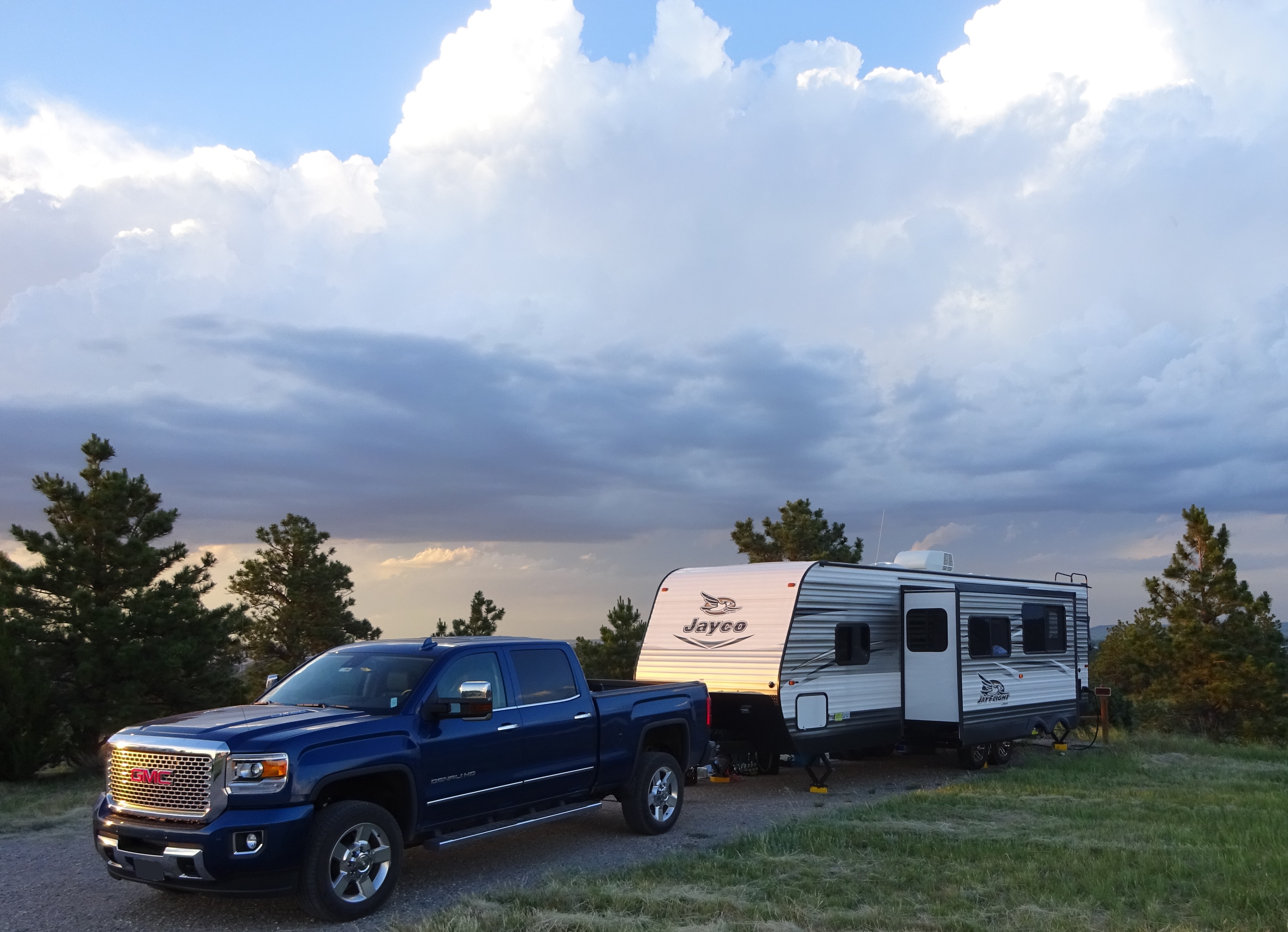
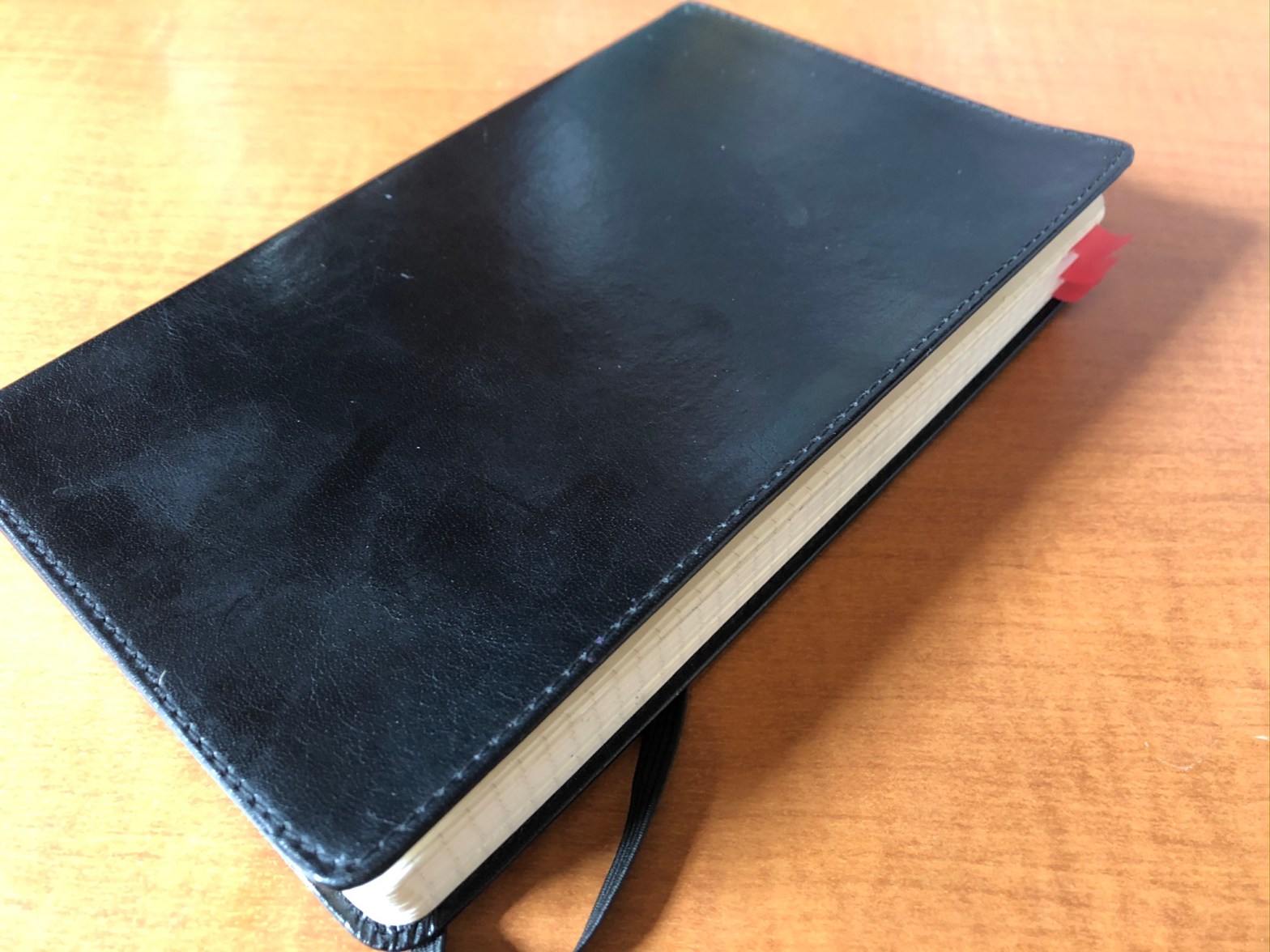
I like to maintain a trailer log for our travels and for trailer service records. It is fun to look back and see our travels, what distances we have covered, and also keep track of maintenance performed on the trailer. A paper journal is easy to keep in my tow vehicle making it convenient to update and reference while towing the trailer.
Since there isn’t a travel log that matches what I like to record; I make my own using a quad ruled journal like the Lemome Hardcover Classic. The quad rule makes it easy to lay out the columns and the 8.5 in by 5.5 in size fits nicely in the truck console.
I separate my log into three different sections: Travel Log, Repairs and Accessories, and Tire Mileage. The travel log takes up the first half; Repairs and Accessories starts in the middle; and Tire Mileage takes up the last eighth of the journal. For quick reference, I use Post-It Flags to mark each section.
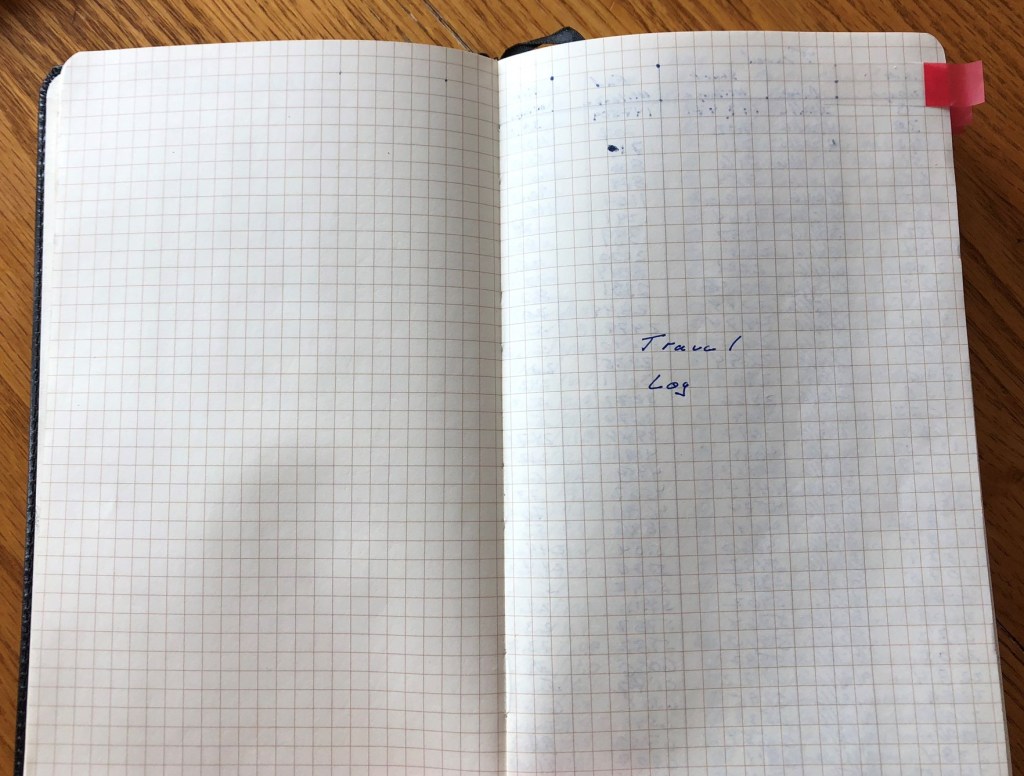

Using a pen and a ruler, I create 9 columns of information for the travel log:
Cumulative Mileage [Cum Mileage] (6 squares): This is he cumulative miles the trailer has been towed. This number is the sum of the previous record plus the total, cumulative miles from the previous record.
Date (4 squares): This is the date of the record.
Start Mileage (6 squares): After hitching to the trailer, I record my truck odometer reading in this column.
End Mileage (6 squares): After unhitching from the trailer, I record my truck odometer reading in this column.
Total Miles (3 squares): To determine the total miles driven for the record, subtract the Start Mileage from the End Mileage. This number is used to add to the cumulative mileage to start the next record.
Miles Per Gallon [MPG] (4 squares from the spine): This column allows me to track the fuel economy of my tow vehicle for each trip. My truck calculates this with the trip gauge, so I reset my Trip B gauge when I hitch and record the miles per gallon when I unhitch. Not all vehicles offer this, so this column may not be useful to everyone.
Cumulative Nights [Cum Nights] (4 squares): This is the cumulative nights the trailer has been camped in. This is the sum of the previous record’s cumulative nights plus the nights camped.
Nights Camped (4 squares): This is the nights camped in the trailer since the trailer was unhitched.
Destination/Notes (13 squares): Generally the destination, but also includes notes like when we started this blog. This is a small area, so if you have to you can take multiple lines and start the next record on the next clear line.
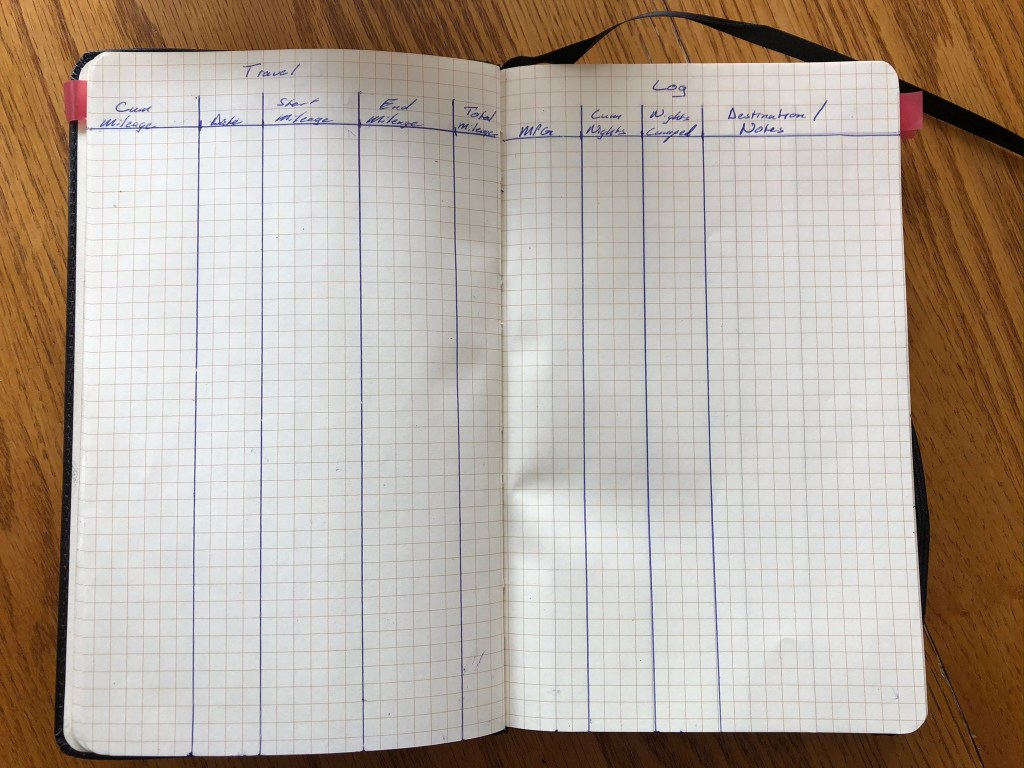
I add a new record every time I hitch and unhitch, including when traveling to and from the storage lot that is close by. The cumulative mileage column is used for the other two sections of the trailer and gives and pretty good indication of the trailer wear and tear. After I unhitch, I calculate the cumulative mileage and nights and enter them in the next record line to be prepare for the next trip.
In the middle of the journal, I place the Repairs and Accessories section. This section has 5 columns of information:
Mileage Reading (7 squares): The cumulative mileage from the Travel Log section at the time of the repair or added accessory (or general note).
Date (5 squares): The date of the repair, accessory installed, or note.
Cost (5 squares): The cost of the work performed.
Station (7 squares or to spine): The station that performed the work.
Work Performed / Notes (Right Page): The notes of the work performed or general observations. Like the travel log, multiple lines might be necessary depending on the work performed.
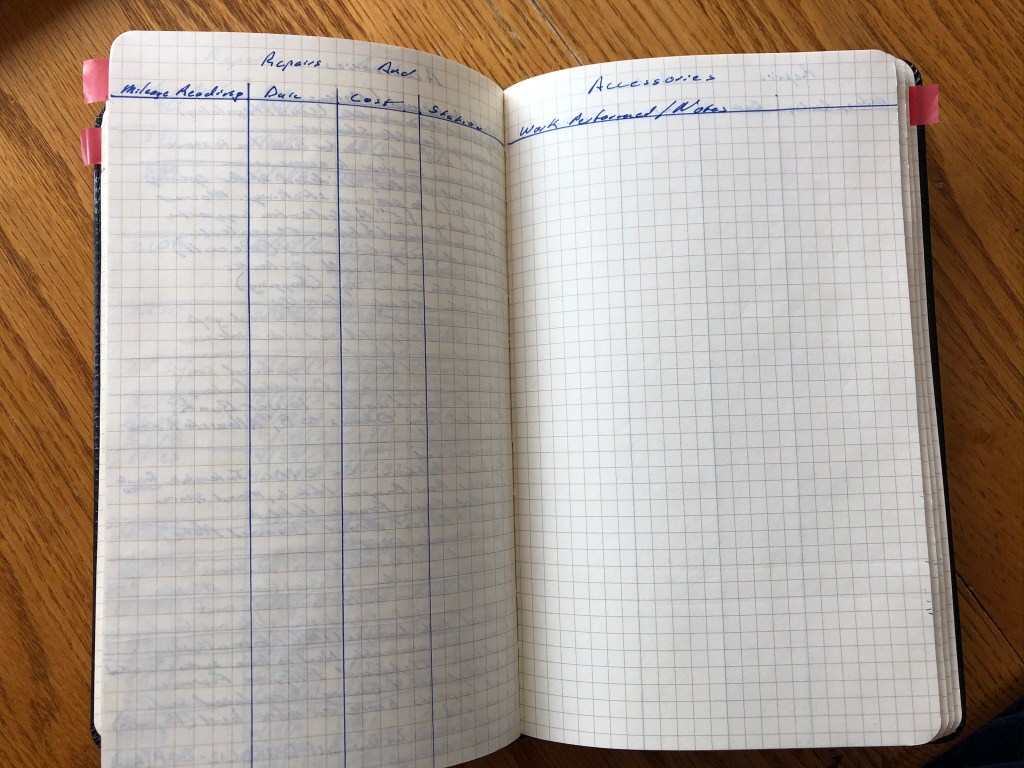
The repairs and accessories section lets me keep track of the work performed on the trailer. This helps remind me how long ago things were last repaired. It always seems a lot sooner than what the log book says. I guess time flies when we are out enjoying ourselves.
The last section is for Tire Mileage. I reserved the last eighth of the journal for this section. I have 6 columns of information for the tire mileage.
Mileage Reading (7 squares): The cumulative mileage from the travel log section at the time the tire work was performed.
Date (5 squares): The date of the tire work.
Cost (5 squares): The cost of the work performed.
Station (7 squares or to spine): The station that performed the work.
Type (6 Squares from the spine): The type of tires installed.
Work Performed / Notes (Rest of the Right Page): The notes of the work performed. Like the travel log, multiple lines might be necessary depending on the work performed.
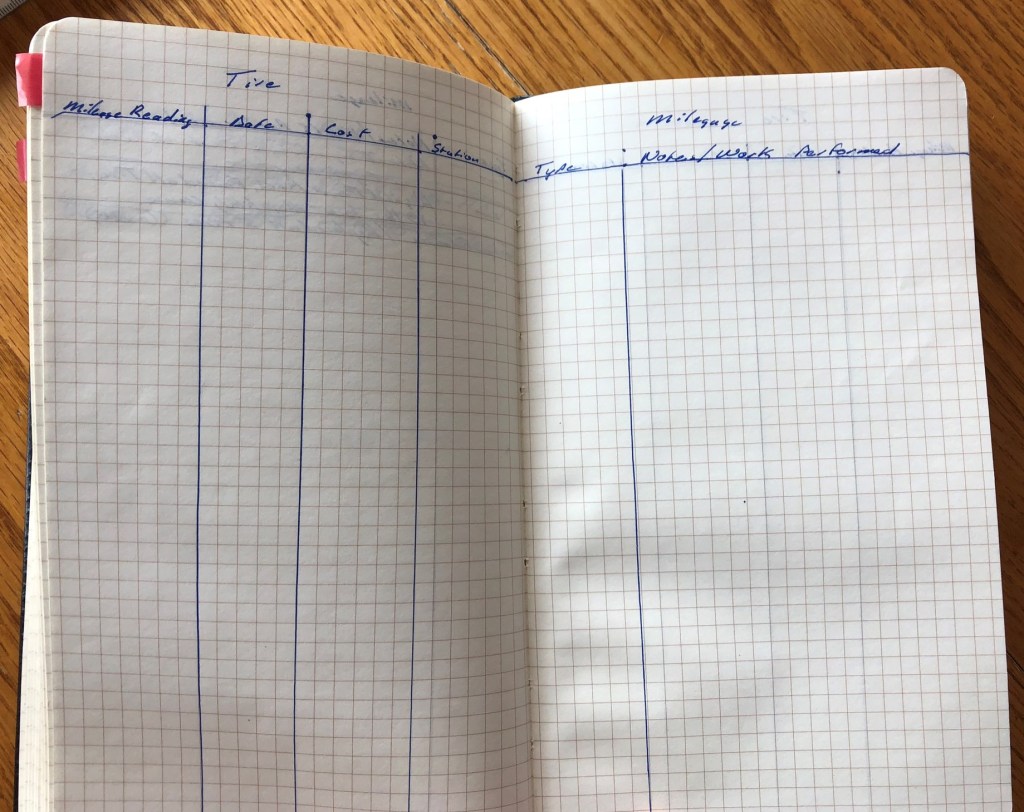
The Tire Mileage section is really helpful for keeping track of how old the tires are and how they are wearing. Anecdotally, I have heard the tires will age out before they wear out and this will help keep track of that age. So far, I have been wearing out my tires before they age out. This is primarily because I have one tire location that wears faster than the other four.
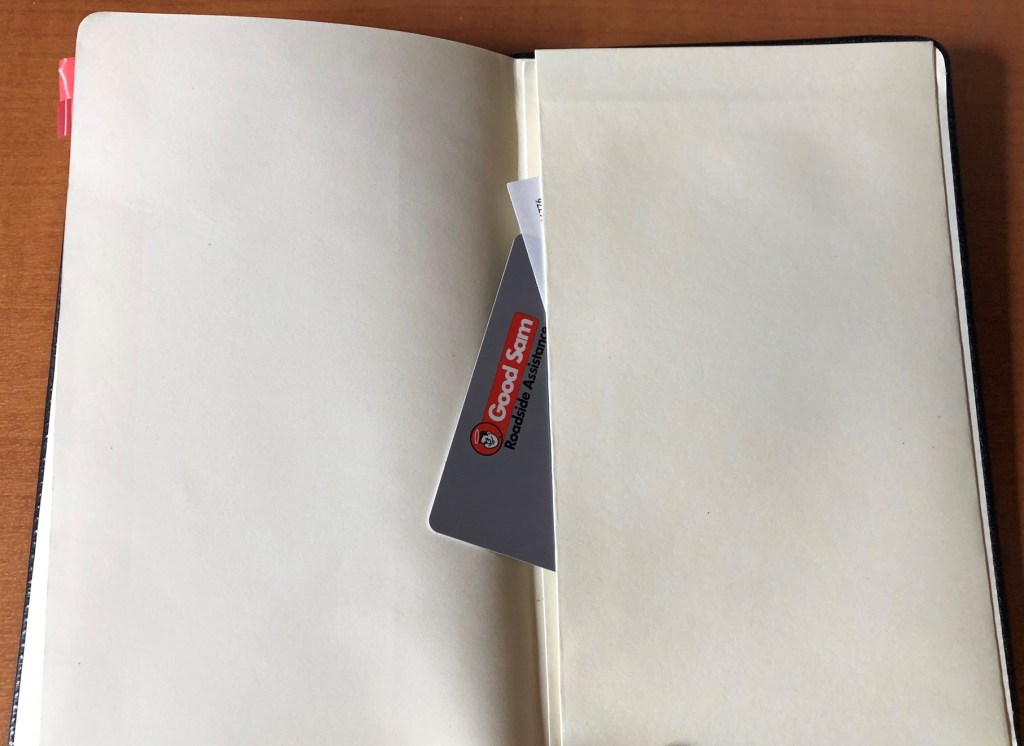
In the back of these journals is a nice feature. There s a pocket that is very handy for putting the insurance card, Good Sam Roadside Assistance card, and other trailer related information so it is easily accessible when needed. If the journal doesn’t have a pocket, I have glued an envelope into the back of journals for other vehicles so I can keep this information handy.
When building my log books, I don’t create every page all at once. I would like to have the full book built, but it does take time to layout each page. I generally create 10 pages or so in each section and that seems to last me a while. When those get full I will bring the book in the house and create another 10 or so pages before the next trip.
— SoWeWentDad
So We Went to the RV Show Blog contains affiliate links. By purchasing through these links, we get a small commission at no additional cost to you. As an Amazon Associate So We Went to The RV Show earns from qualifying purchases.
So We Went to the RV Show Blog is not affiliated with Good Sam. This product is referenced because we use it and like the product.
 So We Went to The RV Show ...